Caregiving Cluster

Care for older adults with dysphagia

Caregivers notice important daily signs: choking, fatigue, food refusal, posture, oral hygiene, and routine changes. This page gathers practical resources for safer care.

Caregiving for older adults with dysphagia is a knowledge area connected to dysphagia care. This hub defines the domain, explains context, organizes frequent questions, highlights limitations, and guides readers to specialized articles, tools, and related centers. It is designed to be useful as a standalone overview and as a structured path for deeper learning.

Knowledge Hub

Caregiver pillar guide

Caregiving for older adults with dysphagia is a knowledge area connected to dysphagia care. This hub defines the domain, explains context, organizes frequent questions, highlights limitations, and guides readers to specialized articles, tools, and related centers. It is designed to be useful as a standalone overview and as a structured path for deeper learning.

What this domain means

Caregiving for older adults with dysphagia connects definitions, daily signs, practical decisions, professional limits, and related learning paths. The reader should understand the subject even before opening a specialized article.

Explore this topic


Why it matters

Swallowing difficulty can affect safety, hydration, nutrition, medication routines, autonomy, emotional comfort, and communication with professionals. A pillar page reduces fragmented reading and organizes the most useful next step.

Explore this topic

Who this hub is for

This hub supports patients, relatives, caregivers, and professionals who need a clear educational overview. It helps translate everyday observations into organized questions, but it does not individualize diagnosis or treatment.

Explore this topic

Main limits

Online content should not define food texture, medication changes, exercises, or emergency conduct by itself. Repeated, progressive, or severe signs require professional guidance and, when breathing is affected, urgent care.

Explore this topic

Relationship with other centers

Dysphagia knowledge connects with safe eating, caregiving routines, and digital records. Moving between centers helps the reader understand signs, meals, daily support, privacy, and monitoring as one care ecosystem.

Explore this topic
Navigation by need

What do you need now?

I am a patient

Understand the theme and prepare safer questions.

Go

I am family

Observe patterns and organize daily information.

Go

I am a caregiver

Use practical limits, checklists, and routines.

Go

I want the app

Learn how digital records can support follow-up.

Go
Key concepts

Understand the essentials

What it is

A structured knowledge area for safer dysphagia-related decisions.

Learn more

Why it matters

It affects comfort, risk, routine, and communication.

Learn more

How to recognize

Look for repeated signs, patterns, and context.

Learn more

What to do

Record observations and use professional guidance.

Learn more

What to avoid

Avoid universal rules and unsupervised changes.

Learn more
Essential Articles

Main caregiver readings

These resources help organize routines, recognize signs, and prepare better conversations with professionals.

Caregiver preparing a calm meal environment for an older adult with dysphagia
Caregiving

Published on July 23, 2026

How to prepare the meal environment for an older adult with dysphagia

Learn how to prepare the meal environment for an older adult with dysphagia, with fewer distractions, better support, suitable utensils, and signs to pause.

Caregiver organizing a discharge plan for an older adult with dysphagia at home
Caregiving

Published on July 18, 2026

Discharge plan for an older adult with dysphagia

Learn what to organize at home after discharge when an older adult has dysphagia, including meals, fluids, medication, and warning signs.

Older adult seated with caregiver support to drink water safely
Caregiving

Published on July 9, 2026

Can an older adult drink water while lying down?

Learn why drinking water while lying down may increase choking risk in older adults and how to offer fluids more safely.

Caregiver observing an older adult seated safely after coughing with saliva
Caregiving

Published on July 7, 2026

Older adult choking on saliva: what should caregivers observe?

Learn why an older adult may choke on saliva, which signs deserve attention, and how caregivers can respond safely.

Caregiver reviews a daily checklist beside an older adult with dysphagia during a safer meal
Caregiving

Published on June 25, 2026

Daily checklist for caregivers of older adults with dysphagia

Use this daily checklist to observe dysphagia signs, meals, hydration, medication issues, and when to seek help.

Caregiver observing an older woman who pauses during a meal
Caregiving

Published on June 18, 2026

Older adult holds food in the mouth: what should a caregiver do?

Learn why an older adult may hold food in the mouth, how to respond safely, and which signs require professional assessment.

Person eating quickly while a caregiver watches for choking risk
Caregiving

Published on June 17, 2026

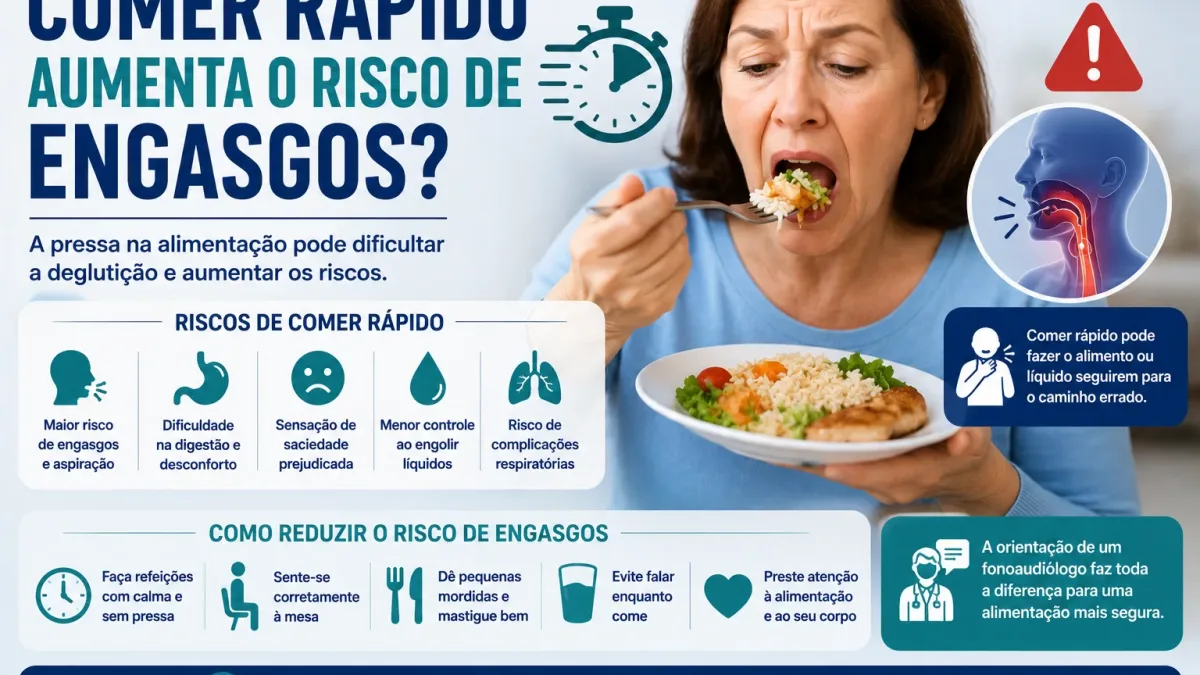
Does eating too fast increase choking risk? When it deserves attention

Learn why eating too fast may increase choking risk, which signs to observe, and how to organize calmer meals without improvising care.

Topic Map

What caregivers should observe

This cluster covers home routines, meal supervision, signs after choking, bedridden older adults, oral hygiene, and when to seek help.

Meal routines

Schedules, environment, pauses, and supervision may reduce rushing and confusion.

Warning signs

Frequent cough, wet voice, fever, weight loss, and fatigue should be recorded.

Posture and offering

Good sitting posture, suitable portions, and respecting pace matter.

Home care

Bedridden, sleepy, or dependent older adults need extra attention during meals.

Subtle changes

Holding food in the mouth, fatigue, or choking on saliva may suggest risk.

Oral hygiene

A clean mouth is part of preventing discomfort and complications.

Subcategories

Choose a focused topic

Explore more specific topics within this Knowledge Center.

6 articles

Home care

Routine, discharge, environment, posture, supervision, and support for older adults with dysphagia.

Routine Discharge Environment
4 articles

Assisted eating

How to offer, supervise, and adapt mealtime with safety and respect.

Posture Supervision Offering
8 articles

Warning signs for caregivers

Choking, fatigue, food held in the mouth, saliva, oral hygiene, and caregiver records.

Saliva Fatigue Records
Daily Care

How can caregivers avoid turning meals into pressure?

Supervision should combine safety and respect. Giving time, observing signs, avoiding excessive insistence, and recording questions can make meals calmer.

For severe choking, shortness of breath, bluish color, or loss of consciousness, seek emergency help. For repeated choking, seek professional assessment.
Prepare a calm environment, seated posture, and utensils within reach.
Observe coughing, wet voice, fatigue, refusal, and food held in the mouth.
Pause offering if discomfort or significant sleepiness appears.
Take episode records and questions to the healthcare team.
Practical guide

Compare, check, and decide the next step

How to choose the next content
Need Focus Content
Understand Definitions and context Open
Observe Signs, patterns, and routine Open
Act Safety limits and next steps Open
Go deeper Specific risks, tools, or advanced topic Open

Reusable checklist

  • Environment prepared
  • Person seated and awake
  • Suitable utensils
  • Pauses and pace
  • Oral hygiene
  • Record signs and doubts

When to seek help

Common signs deserve professional discussion when they repeat, worsen, or affect eating, hydration, breathing, or daily safety.

Common signs

  • repeated choking
  • mealtime fatigue
  • food held in mouth
  • caregiver burden

Urgencies

  • shortness of breath
  • persistent choking
  • loss of consciousness
  • sudden worsening

Myths and facts

One online page is enough for clinical decisions.

Myth. Online content supports learning, not individualized care.

All people need the same adaptations.

Myth. Context, signs, and assessment matter.

Records help professionals understand routines.

True. Clear records can improve appointments.

Clear limits make educational content safer.

True. Knowing what not to decide online reduces risk.

Glossary

Caregiver

Core concept in this hub.

Related content

Routine

Sign or situation that needs context.

Related content

Assisted eating

Useful record or observation for professional conversations.

Related content

Discharge plan

Practical care point that should not become a universal rule.

Related content

Caregiver burden

Related topic that connects this center to others.

Related content

Frequently asked questions

Does this hub replace professional assessment?

No. It is educational and cannot individualize diagnosis, treatment, diet, medication, or exercises.

Where should I start?

Use the Start here section according to your need: basics, signs, safe action, or deeper topics.

Can this page help prepare an appointment?

Yes. The checklist, glossary, and links help organize observations and questions for the care team.

Why are articles linked dynamically?

The hub uses the published article catalog so navigation follows the current knowledge architecture.

What if signs are severe?

Shortness of breath, persistent choking, bluish color, loss of consciousness, or rapid worsening require urgent care.

How does this hub connect to other centers?

Dysphagia care connects signs, safe eating, caregiving routines, records, privacy, and digital tools.

How this hub was prepared

Educational content prepared by the Disfagia App editorial team from the published article catalog, knowledge taxonomy, editorial policy, and institutional references. It does not claim individual clinical review.

Last updated: August 3, 2026

Related articles: 21

Related subcategories: 3

Main sources: ASHA Adult Dysphagia, NHS swallowing problems, WHO digital health guidance, Brazilian Ministry of Health

Next Step

Use observation and records to support care

Care becomes clearer when signs, foods, and questions are recorded and shared with the healthcare team.